
Magnetic Separation and Oil-Water Separation for Oil, Gas, and Petrochemical
Oil and gas production, pipeline transport, and petrochemical processing generate ferrous contamination from a different source than manufacturing — not from machining, but from corrosion. Pipeline corrosion products (iron oxides, iron sulfides), scale from produced water circuits, and catalyst fines from refinery operations all carry ferrous particles that damage equipment, clog injection lines, and degrade process fluid quality.
K Factor's inline magnetic separators address ferrous particle contamination in oil and gas process streams — protecting injection pumps, heat exchangers, and downstream equipment from iron oxide and scale fouling. The OWS systems address the oily water separation challenges that are central to produced water management, compressed gas condensate treatment, and environmental compliance across all oil and gas operating environments.
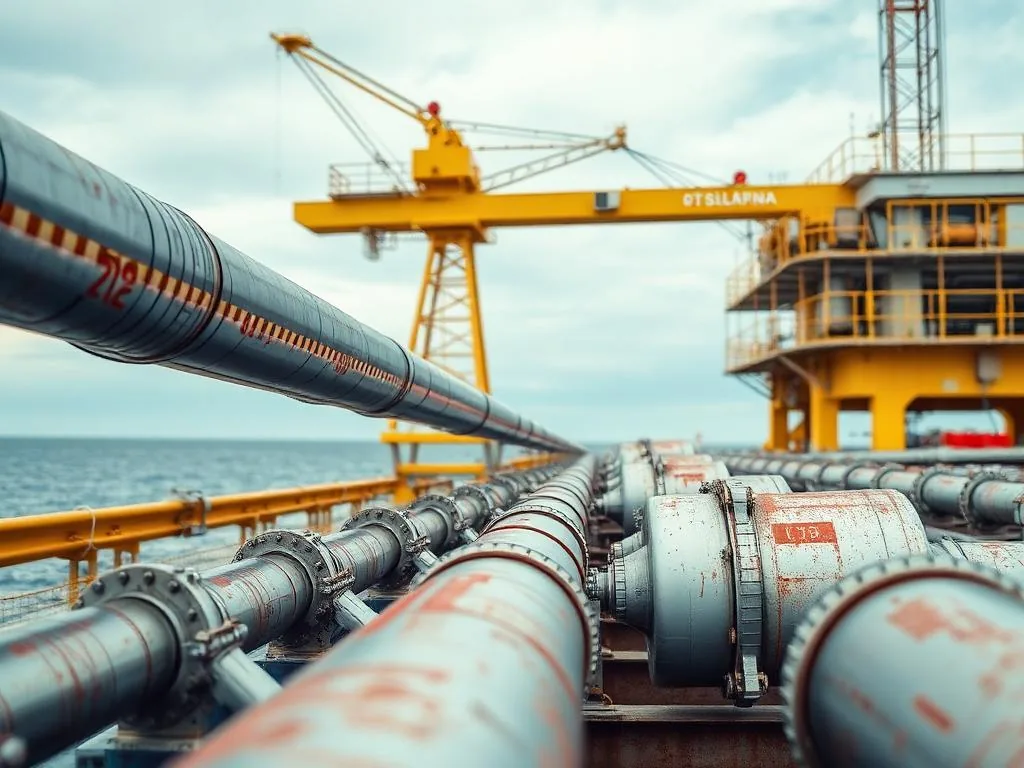
Pipeline corrosion product removal
Pipelines carrying produced water, injection water, or process fluids accumulate iron oxide scale and corrosion products that detach from the pipe wall during flow changes and pressure transients. These particles — predominantly magnetite (Fe₃O₄) and haematite (Fe₂O₃) — are ferromagnetic and highly amenable to magnetic separation. K Factor GT-MAG and K-MAG systems installed on pipeline circuits remove these corrosion products before they reach injection wells, heat exchangers, or process equipment where they cause rapid fouling and damage.
Produced water and oily water separation — OWS in oil and gas
Produced water — water extracted from the reservoir along with oil and gas — contains emulsified and free hydrocarbons that must be separated before the water is re-injected, treated for discharge, or recycled. K Factor OWS systems sized for produced water applications achieve the below-10 ppm oil content required for produced water reuse and discharge compliance under:
- —US regulations: EPA produced water discharge limits under the Clean Water Act; state-level limits in Texas (TCEQ), California (SWRCB), and North Dakota
- —Canadian regulations: Alberta Energy Regulator (AER) produced water management requirements; federal CEPA limits
- —Gulf regulations: ADNOC, Saudi Aramco, and national environmental authority standards for oily water discharge and reuse in UAE, Saudi Arabia, Qatar, and Kuwait
- —International: MARPOL 73/78 for offshore produced water; ISO 15156 for materials in H₂S-containing produced water environments
Service Locations — Oil, Gas, and Petrochemical
Still running media filters that consume rolls every few hours in grinding?
K Factor's 30-day free trial is available for magnetic separation systems. We assess your ferrous particle loading, fluid type, flow rate, and downstream filtration system. We commission the appropriate GT-MAG, PAC-MAG, or K-MAG inline in your circuit. You run it for 30 days and measure the reduction in media consumption, coolant clarity, and tool life. If the results don't justify the investment, return the system. No invoice. No commitment.
Available to qualifying facilities in the United States, Canada, UAE, Saudi Arabia, and other markets.