
CakeFil — Candle Filter for Cake Building Filtration, Sub-Micron Separation, and Dry or Slurry Discharge
When fine-particle separation demands exceed what bag filters, cartridge filters, and standard pressure vessels can deliver — consistent sub-micron separation at flows above 1,000 m³/h, with fully automated operation and no disposable filter elements — the LENZING CakeFil process candle filter is the answer. Its patented candle design achieves 80% better removal of particles from filter cloth pores during backwash compared to conventional candle filters. This is not a marginal improvement. It directly translates to longer cloth service life, fewer cloth replacements, and lower maintenance cost over the life of the system.
K Factor Filter is the North American partner for LENZING Filtration, supplying and commissioning CakeFil systems across the United States, Canada, and the Gulf region — the same partnership that delivers the K-Optifil automatic backwash filter to automotive and industrial clients, extended to LENZING's full product range.

What Is Cake Building Filtration?
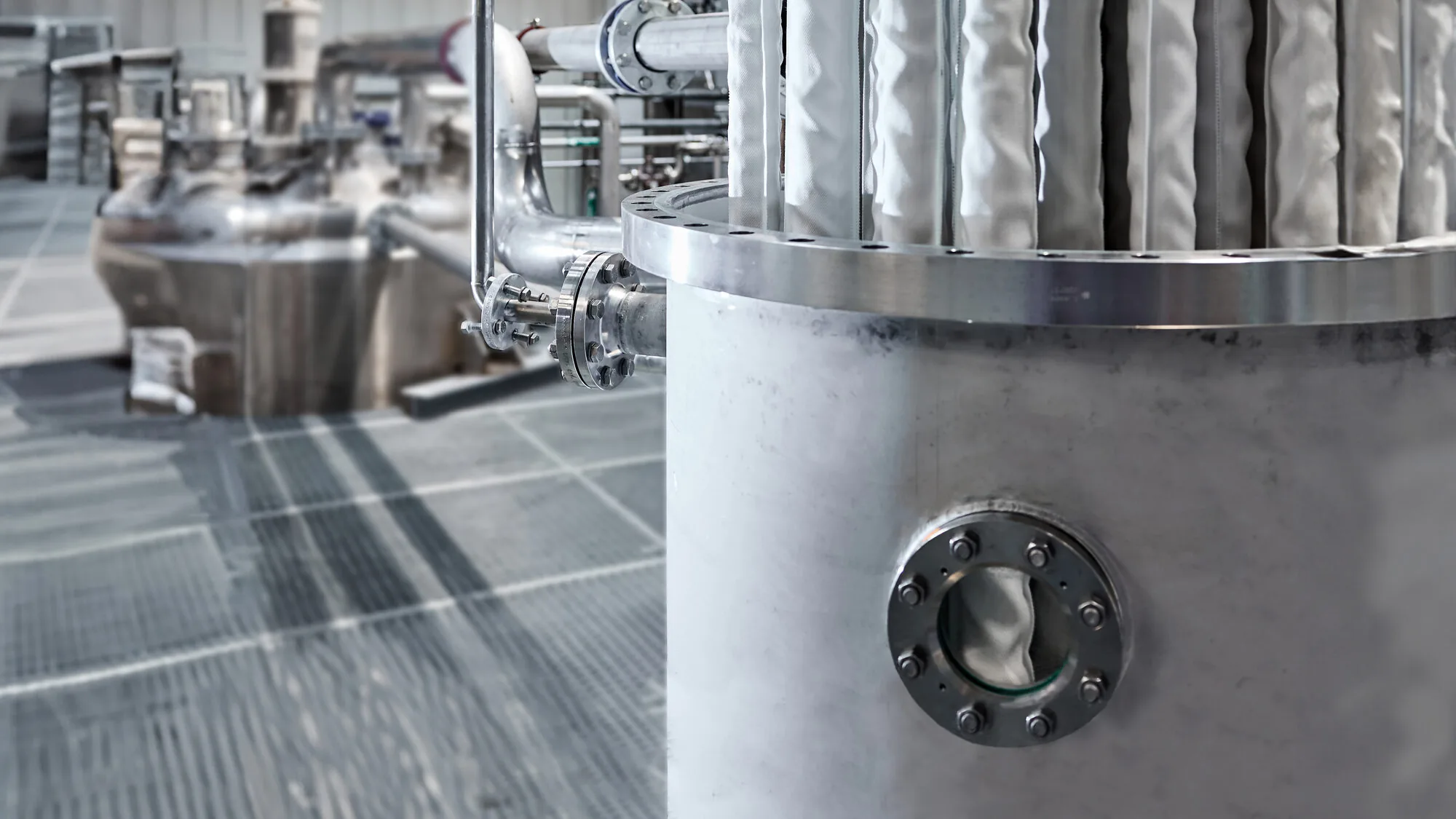
Cake building filtration is a pressure-driven solid-liquid separation process where the actual filtration does not happen primarily at the filter medium — it happens at the filter cake that builds on the medium's surface. As the process fluid flows through the filter, solid particles accumulate layer by layer on the fabric. This growing cake is what separates the fine particles from the liquid.
The critical insight: the cake itself becomes a progressively finer filter medium as it grows. Early in the cycle, it captures larger particles. As layers accumulate, the pore size of the cake decreases — capturing increasingly fine particles. Under optimal conditions with the correct filter aid precoat, a fully developed filter cake separates particles below 1 micron. No other ambient-pressure filter technology achieves this combination of throughput, precision, and continuous automation.
How CakeFil Works — Step by Step
- 01
Feed enters through the inlet nozzle
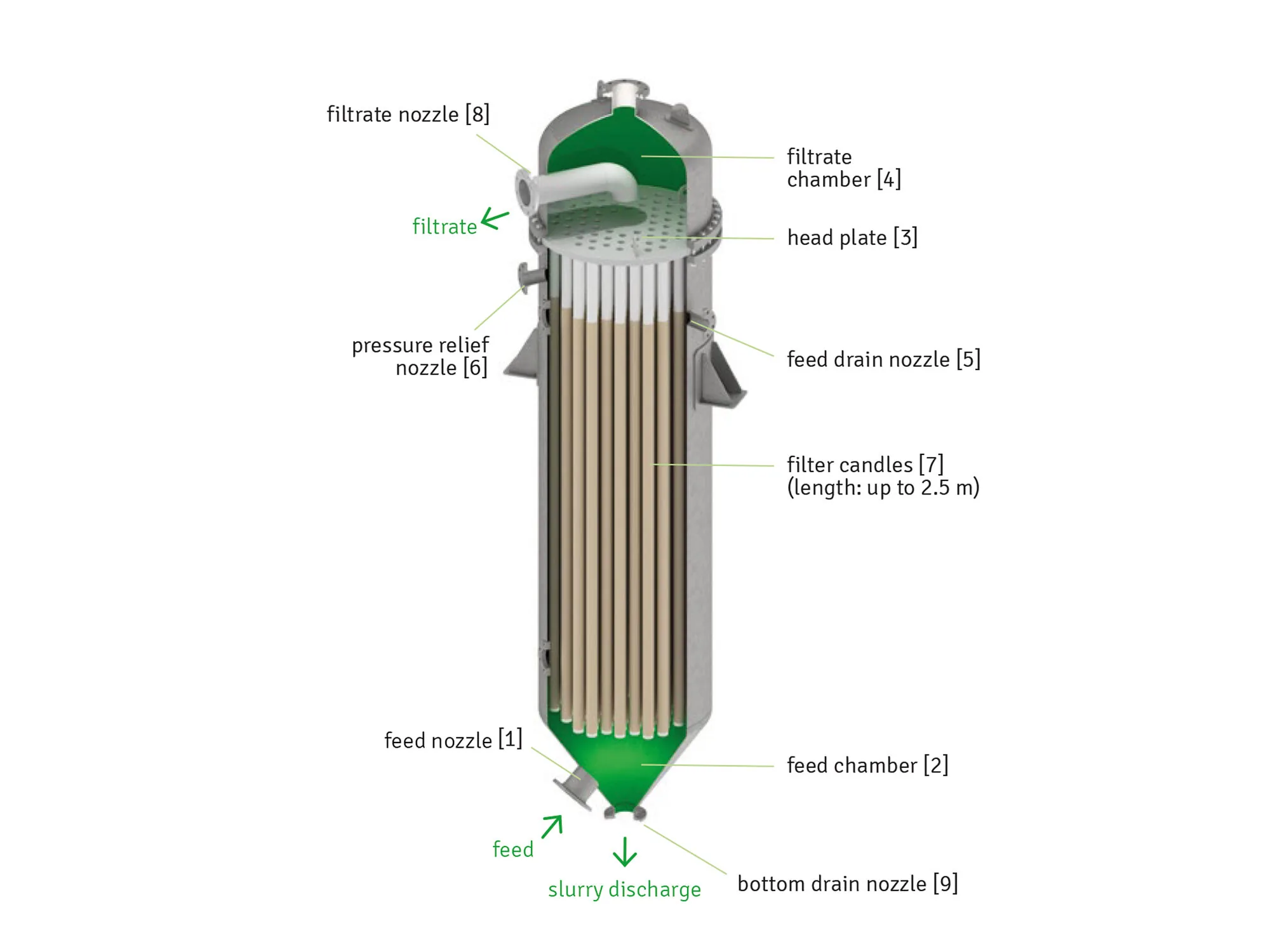
Feed is distributed evenly across the feed chamber surrounding the vertical filter candles. The candles are arranged in parallel within the vessel, giving CakeFil its characteristic high filter surface area — up to 356 m² in a single vessel.
- 02
Fluid flows outside-in through the filter candles
Process liquid passes from the feed chamber outside the candle, through the woven fabric sleeve on the candle body, and into the hollow candle interior. Solids are captured on the outer cloth surface and begin building the filter cake. Filtered liquid travels up through the candle interior and exits via the head plate into the filtrate chamber.
- 03
The filter cake builds and progressively improves filtration
As the cycle continues, each new layer of cake captures finer particles than the layer before it. Differential pressure across the candles rises as cake thickness increases. The system monitors differential pressure to determine when the cake has reached optimal thickness.
- 04
Pressure-driven backwash removes the cake — 80% more effectively
When the cycle ends, the filtrate chamber is pressurised with compressed air or nitrogen and then suddenly depressurised through the pressure relief nozzle. This instantaneous pressure reversal forces a rapid flow of filtrate back through the cloth from inside to outside — dislodging the cake and driving it off the cloth surface. LENZING's patented candle geometry achieves an 80% reduction in residual particles in the cloth pores compared to conventional candle designs.
- 05
Cake is discharged — slurry or dry
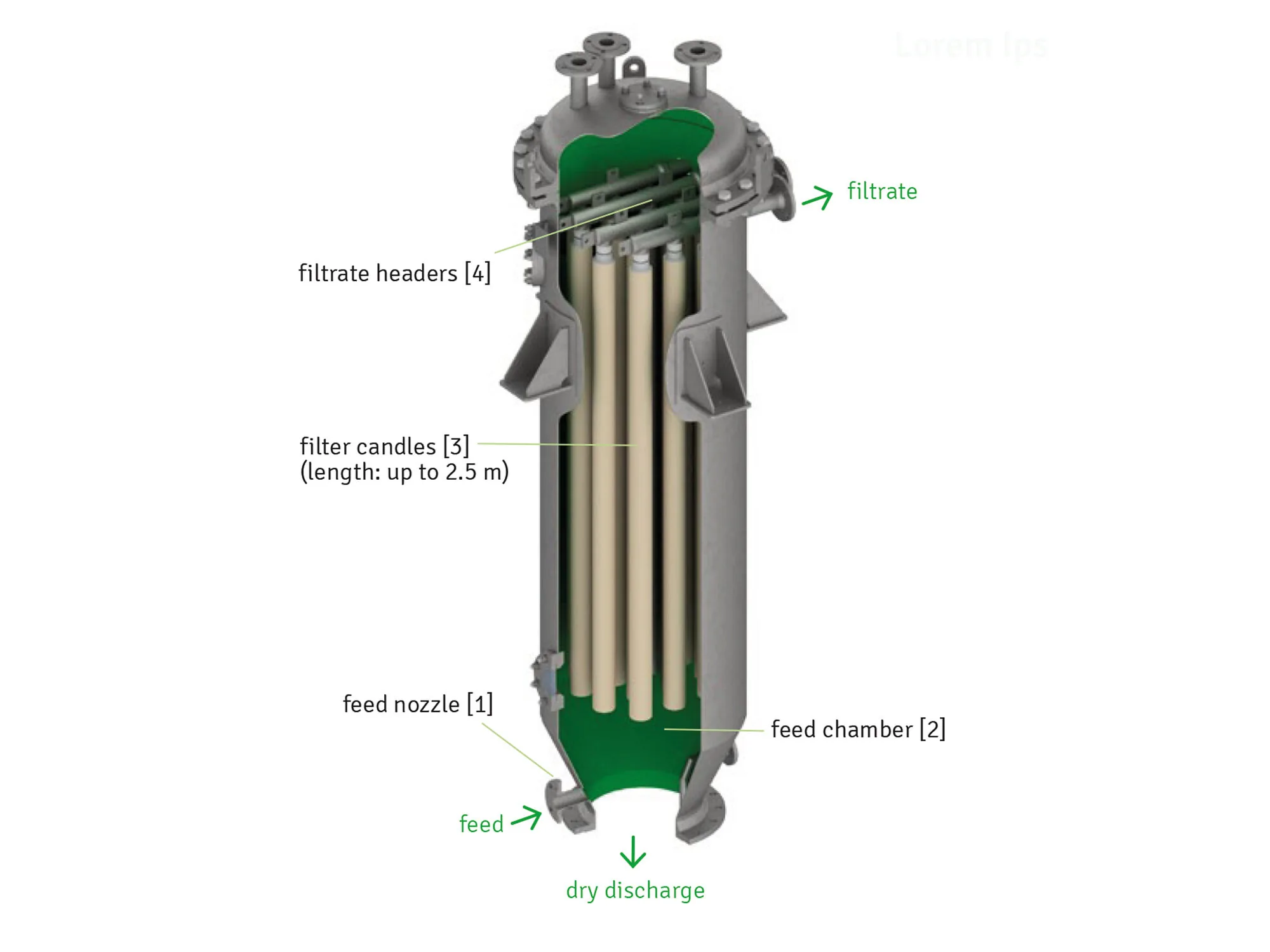
For slurry discharge, the dislodged cake is resuspended and discharged as a homogeneous slurry through the bottom drain nozzle. For dry discharge, compressed gas dries the cake before discharge — producing a solid with controlled, low moisture content suitable for downstream washing, drying, or direct recycling. Both discharge modes are fully automated.
CakeFil Technical Specifications
| Maximum flow rate | > 1,000 m³/h per vessel |
| Maximum filter surface (wet discharge) | 356 m² per filter |
| Operating temperature | Up to 110 °C standard (higher available on request) |
| Maximum solids content | 10% w/w |
| Typical flux | 4 m³/m²·h (throughput per filter surface) |
| Particle separation | Sub-micron (< 1 µm) under optimal conditions with filter aid |
| Fluid viscosity | Low to medium — aqueous to light process oils |
| Discharge modes | Slurry (wet) discharge or dry discharge — both available |
| Backwash improvement | 80% reduction in residual particles vs conventional candle filters |
| Pilot plant — slurry | 1.7 m² filter surface, fully automatic |
| Pilot plant — dry | 1.2 m² filter surface, fully automatic |
| Pilot plant — bench scale | 0.1 m² filter surface, automatic or manual |
Filter Cloth Options — Six Materials for Every Application
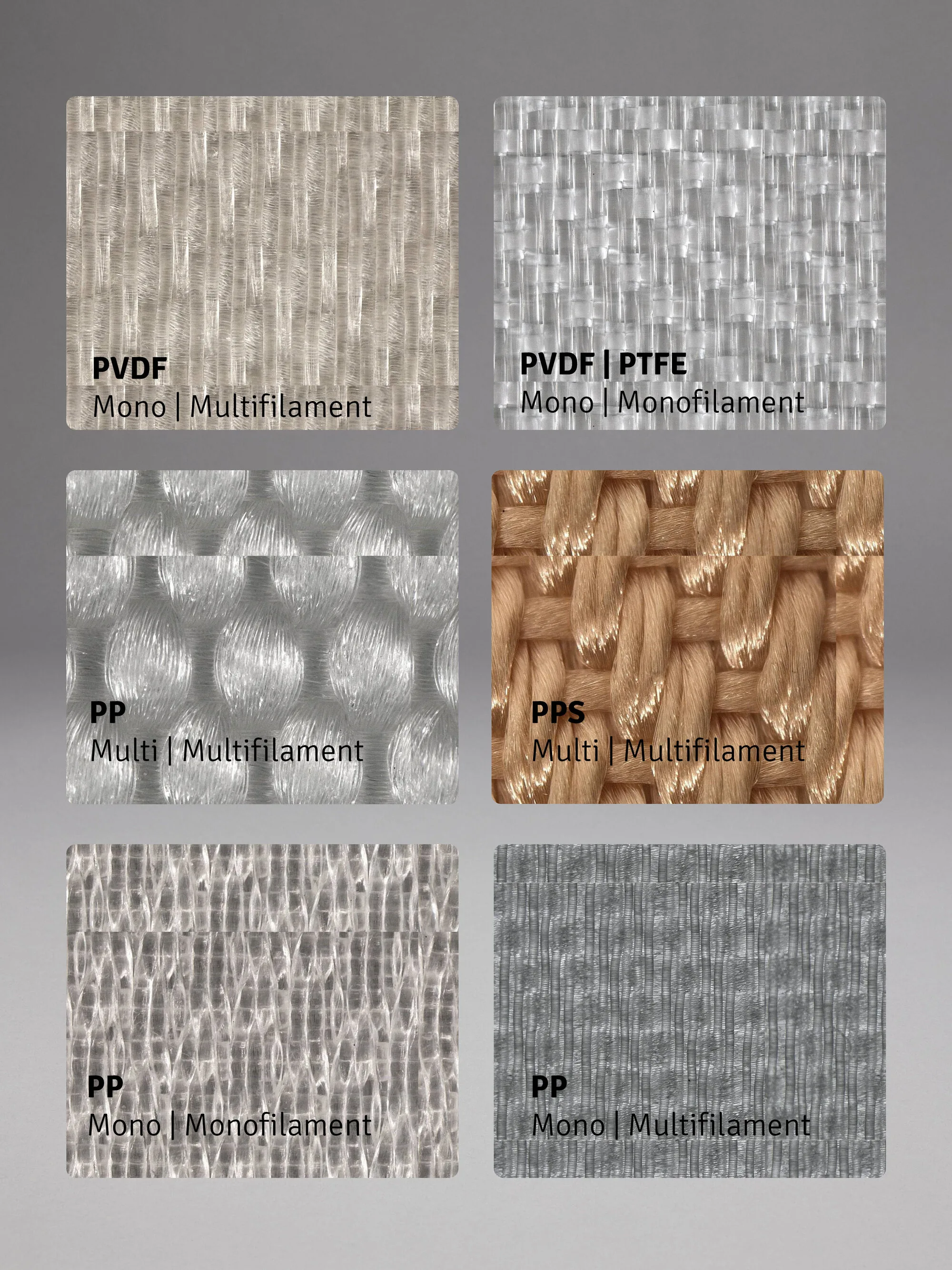
The filter cloth is the interface between the process fluid and the filter cake. Six configurations are available with pore sizes down to 1 micron and temperature resistance to 180 °C.
Standard polymer cloths
- PP Mono (monofilament): High flow, easy cake release — optimal for slurry discharge applications and high-throughput aqueous streams
- PP Multi (multifilament): Higher particle retention — suited for fine-particle applications where cake quality is critical
- PP Mono/Multi: Combines monofilament flow with multifilament retention — optimised for specific cake build and discharge properties
High-performance cloths
- PVDF / PTFE Monofilament: Maximum chemical resistance — for acids, caustics, and aggressive solvents
- PPS Multifilament: High-temperature service to 180 °C — chemical and thermal resistance for aggressive high-temperature streams
- PVDF Mono / Multifilament: Chemical resistance with controlled porosity — for applications requiring both chemical compatibility and fine separation
Filter Aids — How CakeFil Achieves Sub-Micron Performance
For difficult-to-filter solids and applications requiring dissolved-component removal by adsorption, filter aids are precoated onto the cloth and dosed continuously to the feed stream as body feed throughout the cycle.
Cellulose
Natural wood fibres in three grades — standard, extract-free, and highly pure (FDA / EU food-contact compliant). The most widely used CakeFil filter aid for aqueous industrial applications.
Diatomite (Diatomaceous Earth)
Highly porous, rigid particles that create an incompressible filter cake. Standard for sugar, beverage, and pharmaceutical industries. Delivers the finest filtration at equivalent dosage. Not recommended for strongly alkaline streams.
Perlite
Expanded volcanic glass — ultra-lightweight and chemically inert. Creates a more open cake than diatomite — higher flux at some sacrifice in fine-particle separation. Preferred where throughput matters more than sub-5 micron capture.
Activated Carbon
Body-fed activated carbon converts CakeFil into a single-stage combined filter-and-adsorber — capturing hydrocarbons, chlorine, colour bodies, VOCs, and odour compounds while filtering. Eliminates a separate carbon treatment stage.
Two Discharge Modes — Both Fully Automated
Slurry (wet) discharge
Dislodged cake is resuspended and discharged as a homogeneous slurry through the bottom drain — ready for downstream wet processing.
Dry discharge
Compressed gas dries the cake before discharge — producing a solid with controlled, low moisture content suitable for washing, drying, or direct recycling.
CakeFil vs Conventional Pressure Filters
CakeFil advantages
- Sub-micron separation: Achieved via filter cake and filter aids — not achievable at comparable flow rates with bag, cartridge, or drum filters
- 80% better backwash: Patented candle geometry — 80% fewer residual particles in cloth pores after each backwash, directly extending cloth service life
- No disposable elements: Filter cloth replaced at intervals measured in months to years. Candles are permanent and reused indefinitely.
- True process automation: No downtime, no manual intervention. Closed design prevents product loss and enables safe handling of hazardous fluids.
- Dry or slurry discharge: Both modes enable downstream cake processing, washing, recycling, or disposal as a dry solid.
Compared to alternatives
- vs bag filters: No manual changes, no downtime, sub-micron separation, no regulated bag waste — bag filters cannot match CakeFil in duty, precision, or automation.
- vs cartridge filters: No disposable elements, no cartridge waste, flow rates orders of magnitude higher than cartridge housings at equivalent precision.
- vs plate-and-frame press: Fully automated vs labour-intensive manual operation. No open-plate handling. Significantly faster cycle time.
- vs conventional candle filters: 80% better cloth cleaning per backwash = significantly longer cloth life and lower maintenance cost.
Housing Materials — Configured for Your Chemistry
316L stainless steel
Standard — aqueous solutions, mild acids, most industrial fluids
Duplex stainless steel
Higher corrosion resistance — chloride environments, seawater, moderately aggressive chemistry
Super Duplex
Severely corrosive environments — concentrated acids, high-chloride produced water
Carbon steel
Non-corrosive applications where cost is the primary consideration
Carbon steel rubber-lined
Acidic or abrasive slurries — internal rubber lining protects against chemical attack and erosion
All-plastic inner parts
Metal-free configuration — pharmaceutical, food, high-purity chemical applications where any metallic contamination is prohibited
Industries and Applications
CakeFil is designed for applications where conventional bag, cartridge, and drum filters cannot achieve the required combination of fine-particle separation, high throughput, and fully automated continuous operation.
Petrochemical products
Lubricant filtration, process oil clarification, catalyst fines removal from reaction streams
Acids, lyes, solvents
With PVDF/PTFE cloth and Duplex or Super Duplex housings — full chemical compatibility
Brine
Chlor-alkali process brine clarification, salt production, ion exchange feed protection
Lubricoolants
Metalworking fluid clarification where very fine metallic particles require sub-10 micron separation at high flow
Sugar solutions
Juice clarification, syrup filtration, molasses processing — with cellulose or diatomite filter aid
Catalyst recovery
Precious metal catalyst recovery from petrochemical, pharmaceutical, and fine chemical streams
Pharmaceutical APIs
All-plastic inner parts, FDA-compliant cellulose, GMP-validated automated cycle
Mining & water treatment
Mineral concentrate dewatering, membrane pre-filtration, process wastewater polishing
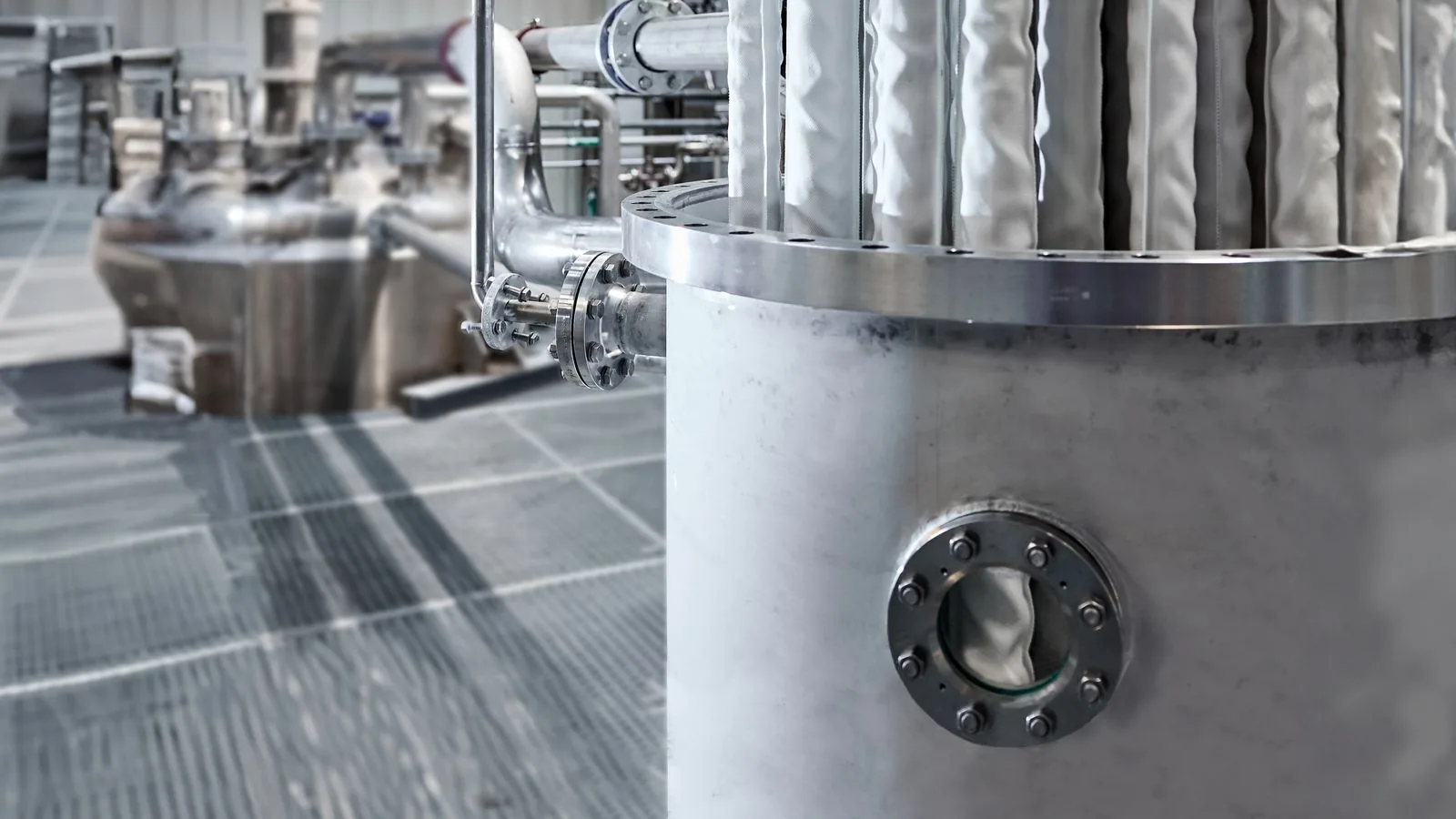
Inside the CakeFil — Housing & Candle Detail
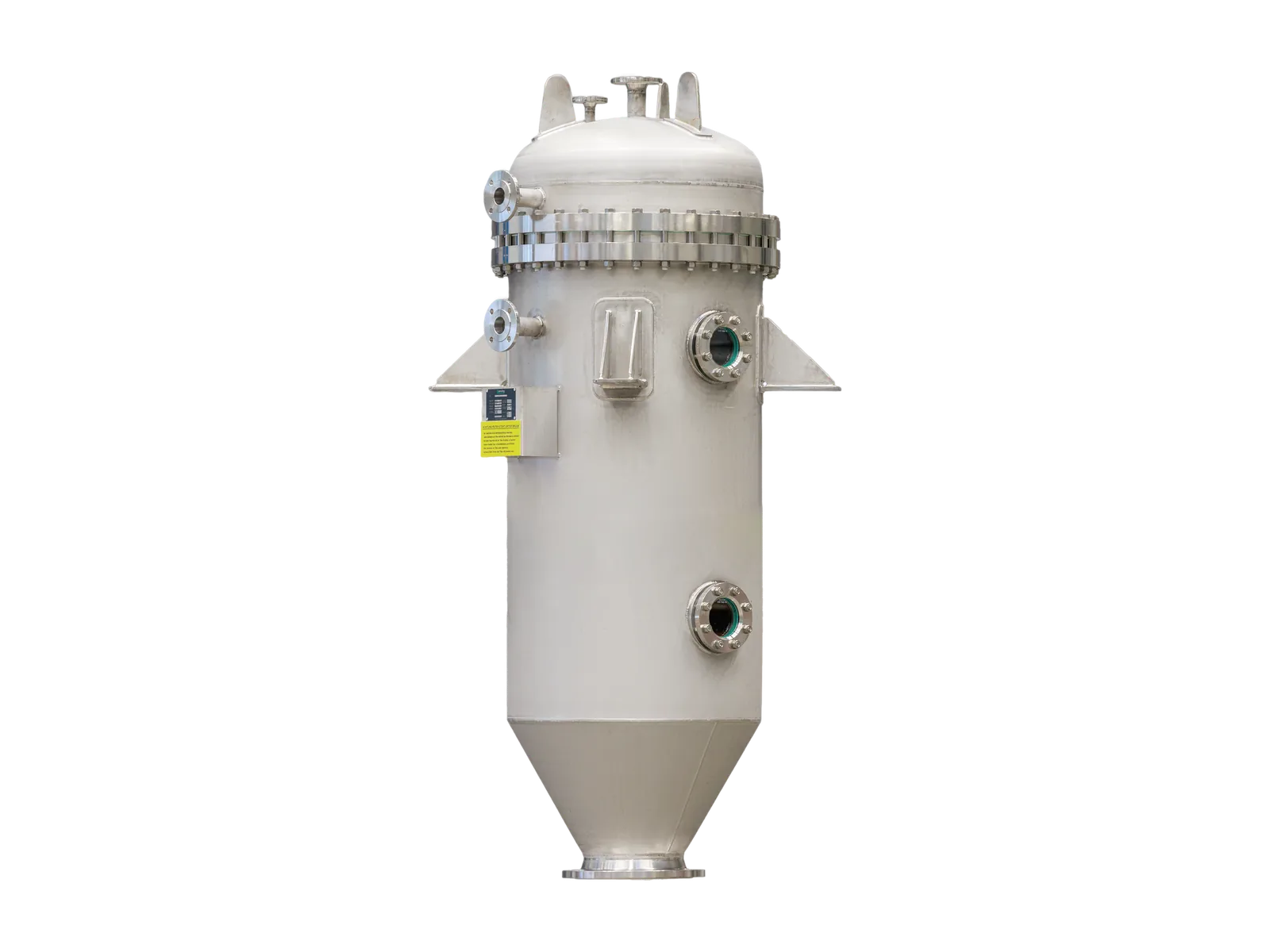
Pressure vessel & candle bundle
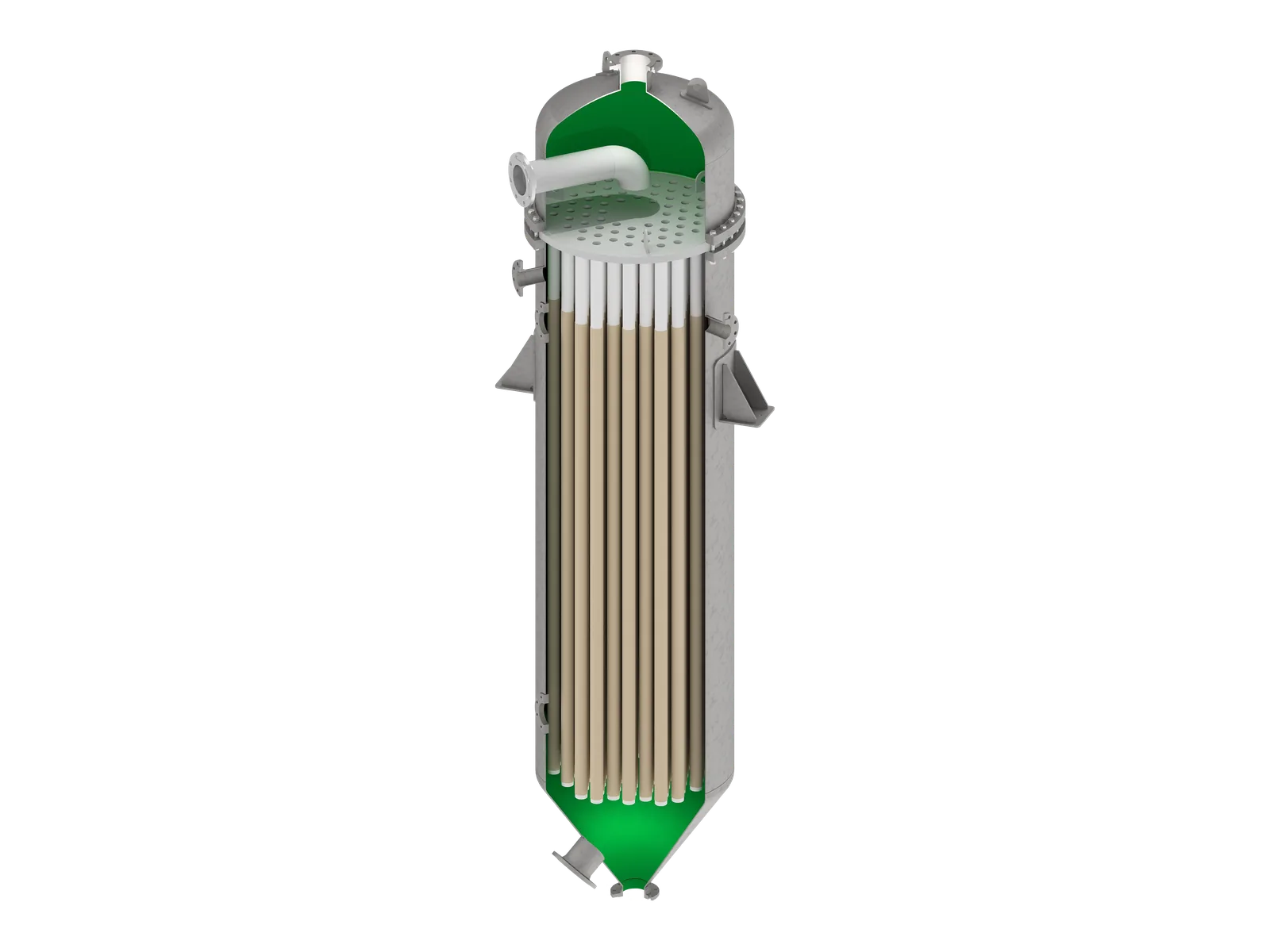
Wet-discharge candle
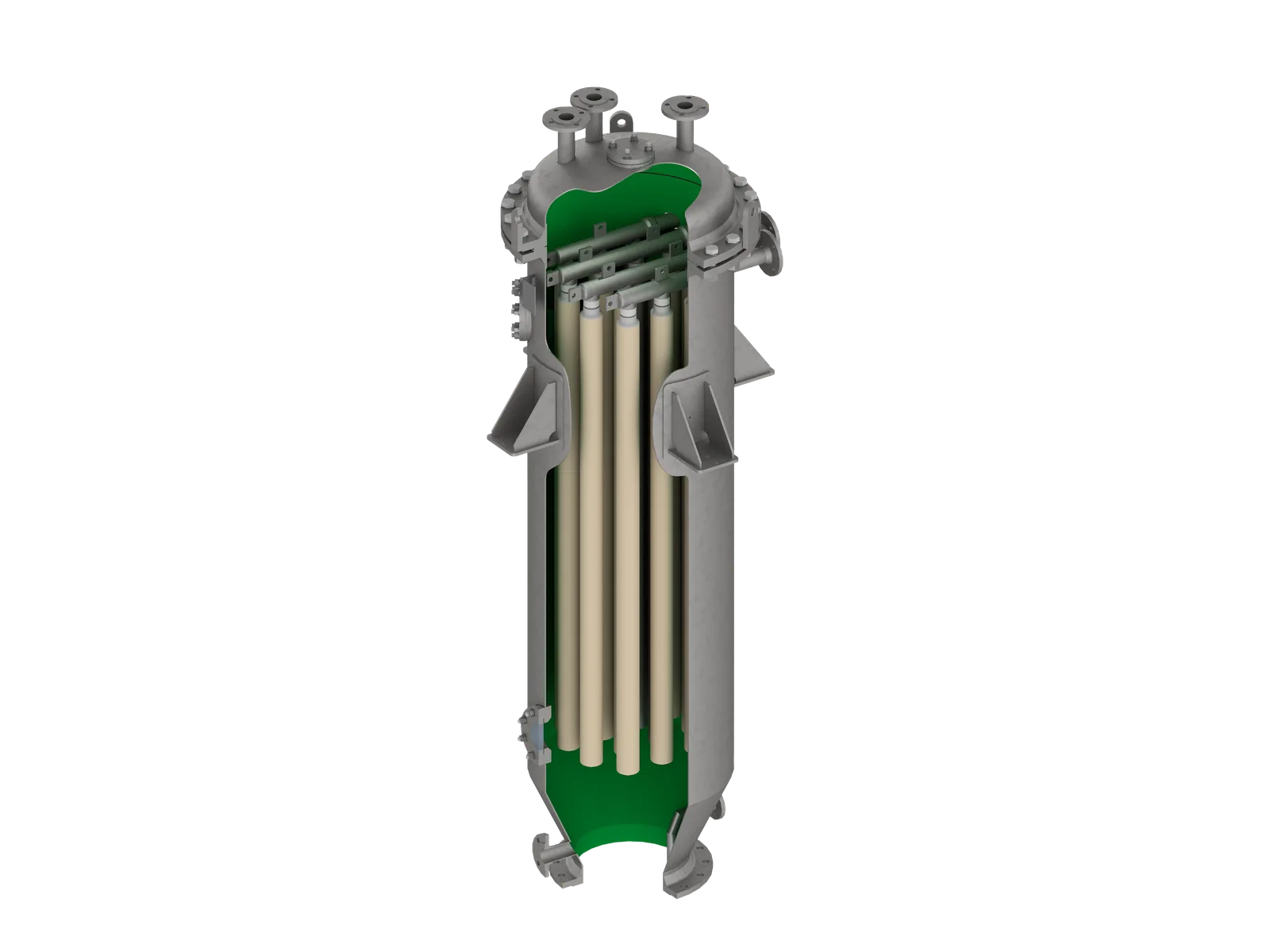
Dry-discharge candle
Pilot Plant Validation Before Capital Commitment
LENZING operates pilot plant facilities at three scales — bench (0.1 m²), dry (1.2 m²), and slurry (1.7 m²) — fully automatic, available for performance validation on your actual process fluid before any full-scale capital commitment. K Factor coordinates pilot trials for North American and Gulf customers.
CakeFil — Frequently Asked Questions
Start Your 30-Day Free Trial
K Factor's 30-day free trial makes the K-Optifil or an inline pressure strainer system available in your facility at no cost and with no purchase obligation. We assess your flow rate, pressure, fluid, and contamination profile. We deliver and commission the system inline. You run it for 30 days and measure continuous flow performance, reject volume, and maintenance time eliminated. If the results don't justify the investment, return it. No invoice.
Available to qualifying facilities in the United States, Canada, United Arab Emirates, Saudi Arabia, and other Gulf markets.