
FlowMag — Chemical-Free Magnetic Scale Control for Industrial Water and Process Fluid Systems
Scale formation — calcium carbonate, calcium sulphate, and iron phosphate depositing on pipe walls, heat exchanger surfaces, nozzles, and process vessels — is among the most pervasive and costly maintenance problems in industrial water systems. Chemical antiscalant injection addresses the symptom but creates its own complications: recurring chemical purchase cost, dosing system maintenance, chemical waste disposal, and in food-grade or pharmaceutical environments, strict constraints on which additives are permissible.
FlowMag addresses scale at the physical level. MHD Magnets' technology combines advanced permanent magnetics and fluid dynamics to change the precipitation and crystallisation behaviour of scale-forming ions. The result: scale-forming particles precipitate as larger, rounder, less-adhesive crystals that remain suspended and are carried downstream — rather than depositing as the hard, adherent scale that coats heat exchangers and blocks nozzles. No chemicals. No consumables. No moving parts. Independent laboratory validation at TU Delft (Delft University of Technology, Netherlands) confirms the mechanism and the performance.
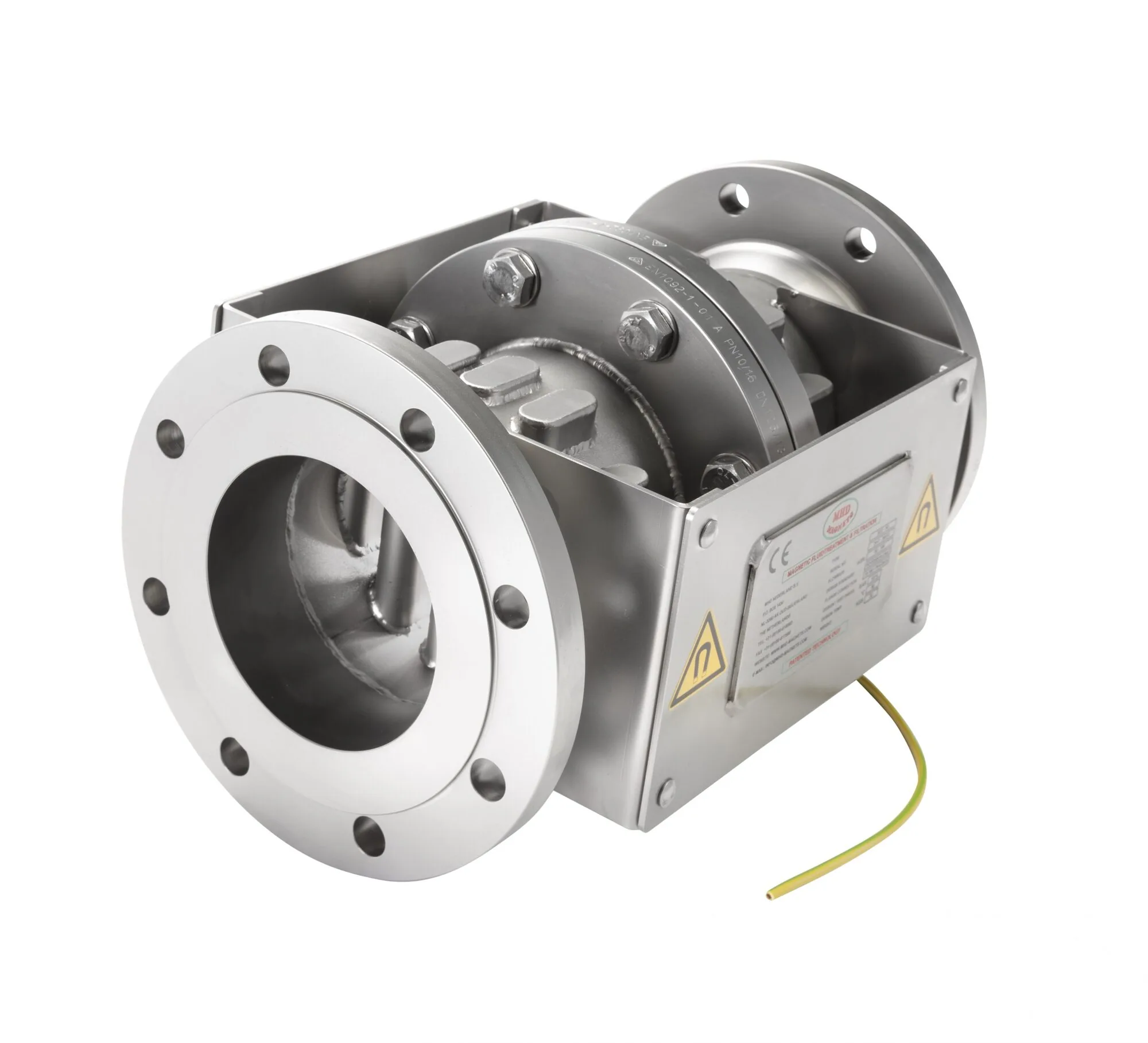
What Is Magnetic Fluid Treatment — And Why Does It Work?
Scale forms when dissolved calcium, magnesium, and carbonate ions in water precipitate out of solution as conditions change — temperature rise, pressure drop, or concentration increase. The morphology of the crystals that form determines whether they deposit as hard scale on surfaces or remain in suspension as loose particles.
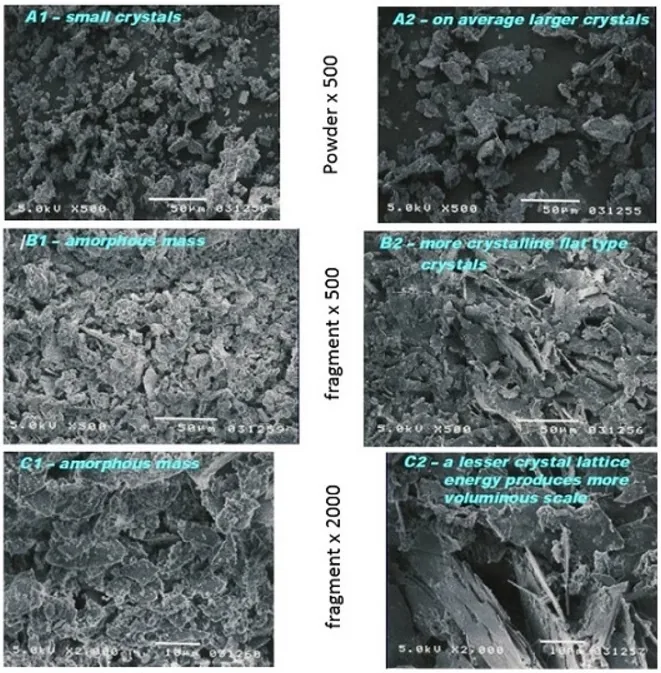
Magnetic fluid treatment changes that morphology. Because of the direct influence of the magnetic field on the particles present and the indirect electromotive force generated inside the FlowMag, the characteristics of dissolved and suspended species change. As demonstrated in TU Delft's calcium phosphate precipitation study — using electron microscopy at 500× and 2,000× magnification — particles treated by FlowMag precipitate as larger, rounder crystals with significantly lower surface adhesion. These crystals stay suspended in the fluid and are carried out of the system in blowdown or drainage rather than depositing as scale.
Preventive and Corrective Action — Both Simultaneously
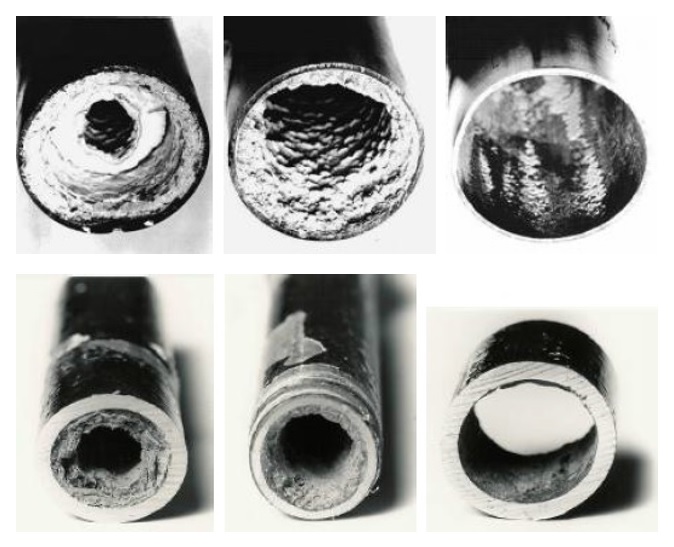
Preventive — new systems
In new piping and process equipment, FlowMag prevents scale from establishing. Scale-forming ions precipitate as suspended particles rather than surface deposits from day one. Heat exchanger efficiency is maintained from commissioning. Nozzles remain clear. Pipe bore is preserved.
Corrective — existing scale deposits
In operating systems with established scale, FlowMag's magnetic field proportionally dissolves and disintegrates previously deposited scale. The disintegrated particles are carried downstream and exit the system through blowdown or drainage. MHD Magnets documents this corrective action with before-and-after photographs from automotive installations at 3 months and 7 months — progressive scale dissolution confirmed visually.
FlowMag Specifications — Full Size Range
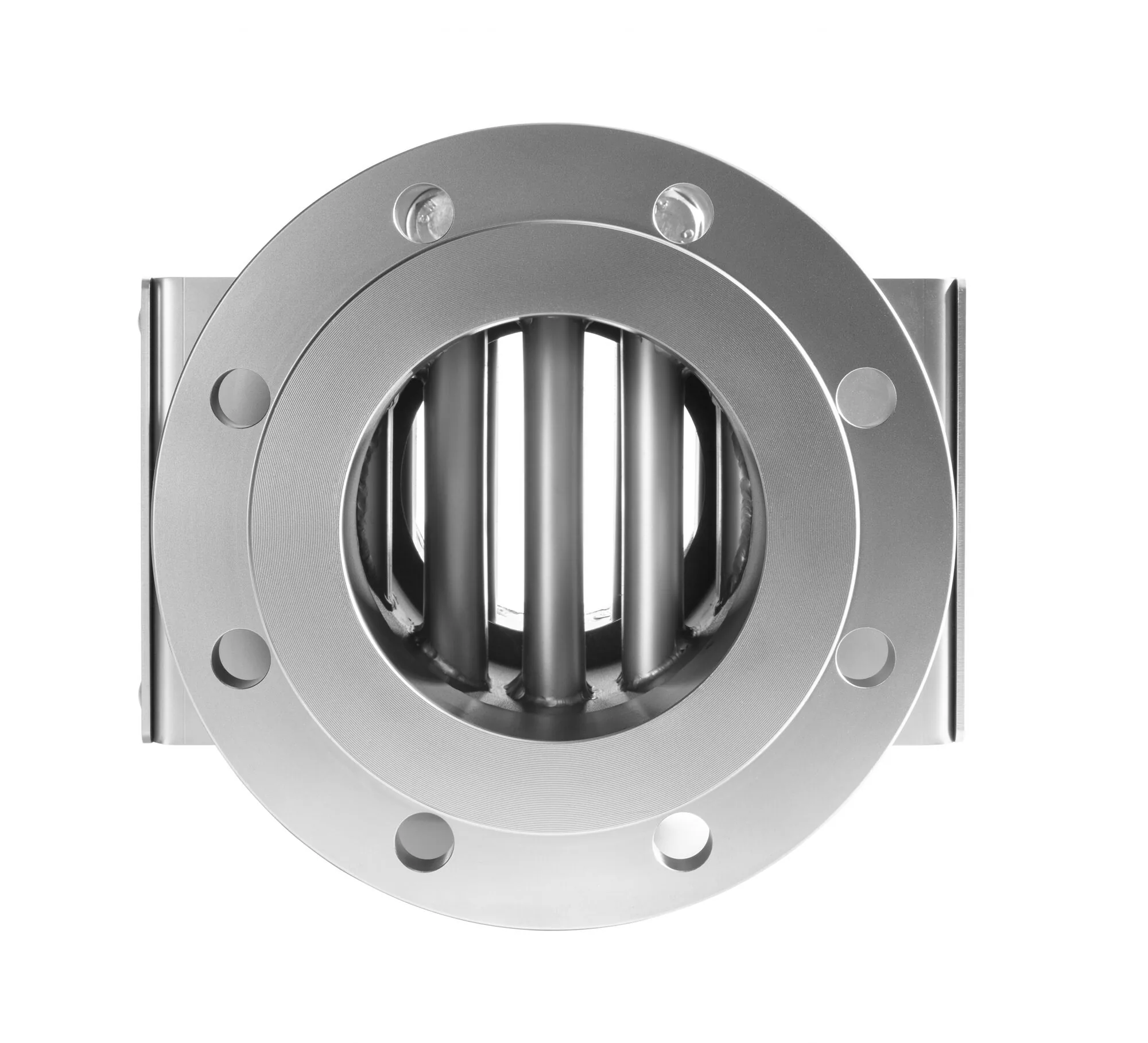
All FlowMag models share the same core performance: pressure drop below 0.1 bar across the full operating range, EN 1092-1 Type 01 flanged connections, modular design allowing series installation, and 0.5 Tesla effective magnetic flux density throughout the active treatment zone. No power supply required.
| Model | Capacity | Connection | Length | Weight | Flux |
|---|---|---|---|---|---|
| SST-3 | 30–45 m³/h | PN16 DN80 | 350 mm | 20 kg | 0.5 Tesla |
| SST-4 | 40–60 m³/h | PN16 DN100 | 350 mm | 30 kg | 0.5 Tesla |
| SST-5 | 60–100 m³/h | PN16 DN125 | 400 mm | 40 kg | 0.5 Tesla |
| SST-6 | 95–150 m³/h | PN16 DN150 | 450 mm | 50 kg | 0.5 Tesla |
| SST-8 | 145–250 m³/h | PN16 DN200 | 450 mm | 70 kg | 0.5 Tesla |
| SST-10 | 245–450 m³/h | PN16 DN250 | 450 mm | 110 kg | 0.5 Tesla |
| SST-12 | 445–650 m³/h | PN16 DN300 | 450 mm | 120 kg | 0.5 Tesla |
FlowMag Plus — High Pressure and Chemical Resistance
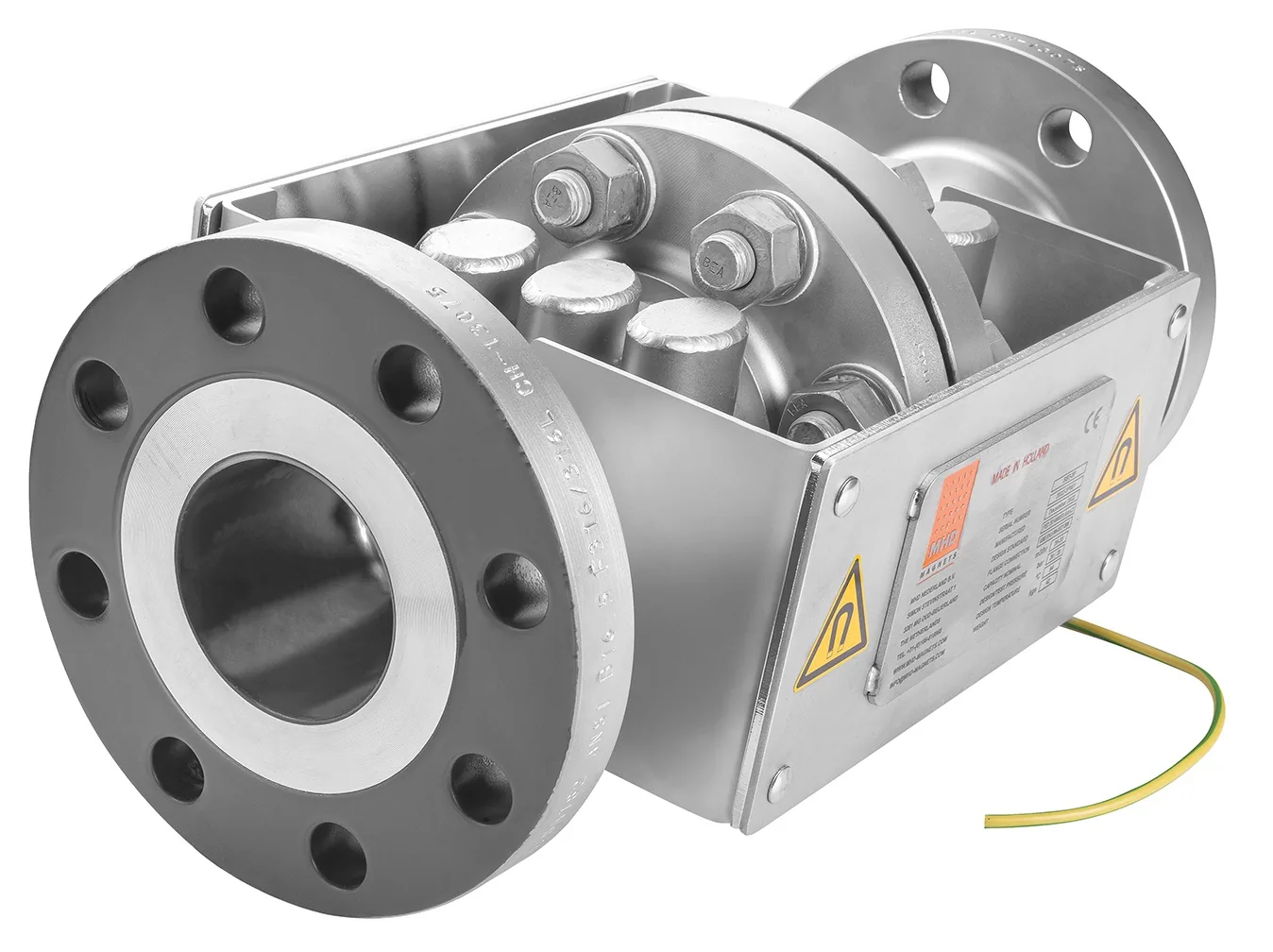
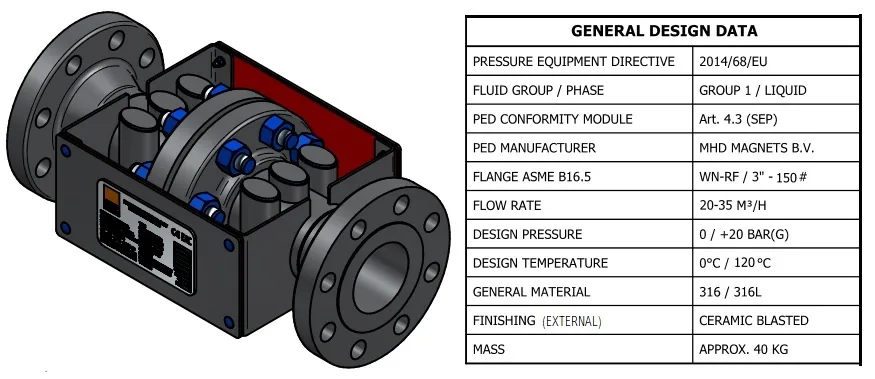
The FlowMag Plus is the enhanced variant designed for applications where high operating pressure and/or the presence of aggressive chemicals prevents installation of the standard FlowMag. Two engineering changes distinguish the Plus.
Higher pressure rating
A different internal tube configuration significantly increases burst and operating pressure capability — enabling installation in high-pressure process lines, upstream oil & gas water handling, and other systems where the standard FlowMag cannot be used.
Chemical resistance coating
An internal coating on the magnetic module makes FlowMag Plus resistant to excessive wear and aggressive fluids. The coating is selected based on the specific chemistry of each application — acids, caustics, oxidising agents, or combinations. K Factor's engineers confirm the correct coating spec per installation.
FlowMag vs Chemical Antiscalant — When to Choose Each
FlowMag is the right choice when:
- Zero chemical cost is a priority: No antiscalant purchase, no dosing system maintenance, no chemical waste — operating cost after installation is zero
- Food or pharmaceutical process water: Chemical dosing in contact with process water is restricted or prohibited — FlowMag provides scale control without adding any substance to the water
- Remote or unmanned facilities: No chemicals to replenish, no pumps to service — FlowMag operates indefinitely with no intervention
- Corrective action needed: FlowMag dissolves existing scale deposits — chemical antiscalants prevent new scale but cannot remove established deposits
- ESG and sustainability targets: Eliminating antiscalant chemical use is a measurable, documentable chemical reduction contribution
Chemical treatment may be preferred when:
- Very high water hardness: Above approximately 500 mg/L as CaCO₃, magnetic treatment may need to be combined with chemical rather than used as standalone replacement
- Specific ion removal required: Where sodium reduction or specific ion removal — not just scale prevention — is the goal, ion exchange remains necessary
- Barium sulphate scale: FlowMag's primary validated performance is on calcium carbonate, calcium sulphate, and iron phosphate scale — barium sulphate suitability should be confirmed with K Factor's engineers
Industries Served — FlowMag
Cooling towers & HVAC
Scale prevention on fill, heat exchangers, spray nozzles — automotive, industrial, commercial, data centres
Automotive manufacturing
Cooling water circuits, phosphate pretreatment makeup water, paint line process water — one of MHD's most established application areas
Oil & gas
Produced water circuits, injection water lines, heat exchangers, pipeline scale — FlowMag Plus for high-pressure sour service
Chemical processing
Process water circuits, reactor cooling, heat exchanger feed — FlowMag Plus for aggressive chemistry environments
Food & beverage
CIP water, process water, steam generator feed — where chemical dosing restrictions apply
Pharmaceutical
Process water circuits where chemical additives are prohibited
Mining
Process water scale control, mine dewatering circuits, slurry water scale prevention
Power generation
Cooling water circuits, condenser protection, boiler feed pre-treatment at large-flow scale — SST-10 and SST-12 models
FlowMag — Frequently Asked Questions
Still paying for antiscalant chemicals every month? Still cleaning heat exchangers every quarter?
K Factor's 30-day free trial is available for FlowMag and FlowMag Plus systems. We size the correct model for your flow rate, supply and install inline on your circuit, and you evaluate scale formation and heat exchanger performance against your pre-installation baseline over 30 days.
Available to qualifying facilities in the United States, Canada, UAE, Saudi Arabia, and other markets.