
Magnetic Separation Systems — Ferrous Particle Removal, Oil-Water Separation, and Purge Recovery
Ferrous particle contamination in industrial process fluids is silent and cumulative. It doesn't announce itself the way a clogged filter does — it accumulates quietly in coolant, degreasing baths, and process water, abrading pump impellers, loading filter media, degrading surface finish quality, and accelerating tool wear until the damage is too expensive to ignore. K Factor's magnetic separation systems address every aspect of ferrous particle management: inline removal from process fluid streams, oil-water separation for coolant and wastewater, purge water recovery for zero liquid discharge compliance, and high-volume drum separation for the heaviest industrial contamination loads.
Unlike media filters and bag filters that capture both ferrous and non-ferrous particles indiscriminately and require scheduled media replacement, magnetic separators target ferrous contamination specifically and continuously — with no consumable elements, no disposable media, and no scheduled replacements. The magnet is permanent. The capture is automatic. The operating cost is essentially zero once installed.
What Is Industrial Magnetic Separation?
Industrial magnetic separation is the removal of ferrous (iron-containing) particles from a liquid stream using a permanent or electromagnetic magnetic field. As the fluid passes through or over the magnetic element, ferrous particles are captured on the magnet surface and held there while the clean fluid flows on. Captured particles are periodically discharged — either automatically on a timed or sensor-triggered cycle, or manually — and the system returns immediately to full separation performance.
Magnetic separation is effective only on ferrous materials — particles that contain iron, steel, cast iron, or other magnetic metals. Non-ferrous particles (aluminium, copper, titanium, carbide, ceramic) are not captured by magnetic separators and require media filtration or other technologies. In most industrial coolant and process fluid applications, however, ferrous particles represent the majority of the contamination mass — making magnetic separation the highest-impact single investment for ferrous-particle-intensive operations like grinding, honing, gear cutting, and machining of ferrous metals.
The K Factor Magnetic Separation Product Line
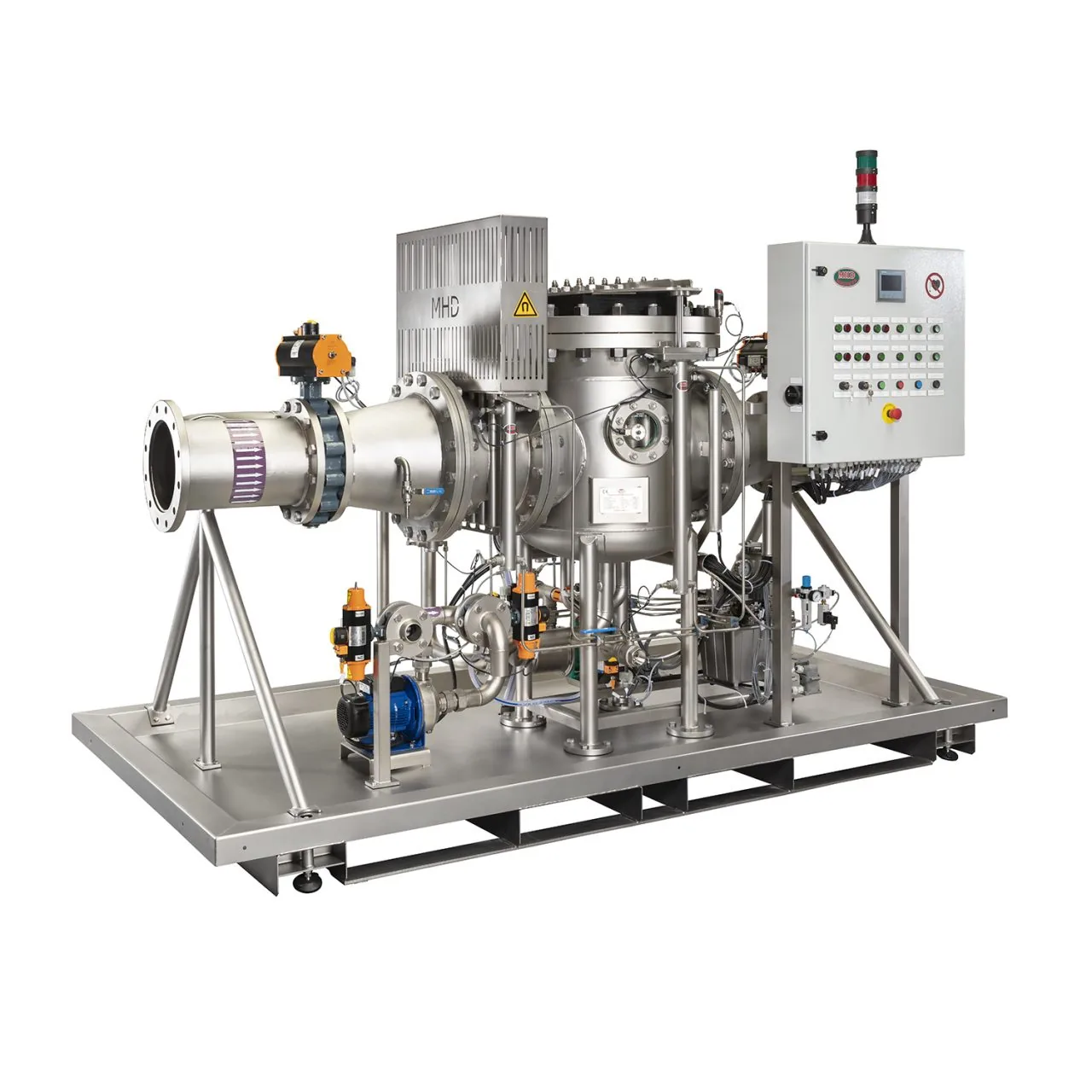
K Factor's magnetic separation line is the result of three technology partnerships with European specialists: MHD Magnets of Belgium (PAC-MAG and ROTOMAG systems), Esselent Solutions of the Netherlands (Q-Mag and the magnetic component of the K-Drum system), and K Factor's own patented Gravity Tunnel technology (GT-MAG). Together, these partnerships give K Factor access to magnetic separation technology that no single North American manufacturer can match in specification or application breadth.
Three Sub-Categories — Four Solutions
Fully integrated system
In the most demanding applications, all three sub-categories work together: PAC-MAG removes fine ferrous particles inline, the OWS removes tramp oil simultaneously, and the K-Drum with Black Belt handles the heavy-chip purge from the PAC-MAG — recovering fluid and managing solids in a single continuous circuit.
Why Magnetic Separation First — Then Media Filtration
The most cost-effective industrial coolant filtration strategy pairs magnetic separation with media filtration in series: magnetic separator first, media filter second. This sequence maximises the performance and economic life of both systems.
Magnetic separator removes ferrous particles continuously.
No media is consumed. No replacement interval. The magnet operates at full performance indefinitely.
Media filter handles non-ferrous and fine particles.
With ferrous particles removed upstream, the media filter faces only non-ferrous contamination — dramatically reducing its loading rate and extending media intervals from hours to days or weeks.
Media consumption falls by 50–80%.
Industry data consistently shows that magnetic pre-filtration before a paper bed or gravity media filter reduces media consumption by 50–80% — because ferrous particles, which are disproportionately heavy and dense, account for the majority of media loading mass in ferrous metal machining operations.
Total filtration cost falls.
Less media consumed, less labour for media changes, less disposal cost. The magnetic separator pays back through media savings alone — typically within 6–18 months — then delivers ongoing savings indefinitely.
Industries and Markets
K Factor magnetic separation systems serve manufacturing and process industries wherever ferrous metals are machined, ground, cleaned, or processed in a liquid medium. The systems operate on six continents, serving facilities from small job shops with a single grinding machine to automotive assembly plants with 60-machine central coolant systems.
Magnetic Separation — Frequently Asked Questions
Still running media filters that consume rolls every few hours in grinding?
K Factor's 30-day free trial is available for magnetic separation systems. We assess your ferrous particle loading, fluid type, flow rate, and downstream filtration system. We commission the appropriate GT-MAG, PAC-MAG, or K-Drum inline in your circuit. You run it for 30 days and measure the reduction in media consumption, coolant clarity, and tool life. If the results don't justify the investment, return the system. No invoice. No commitment.
Available to qualifying facilities in the United States, Canada, UAE, Saudi Arabia, and other markets.